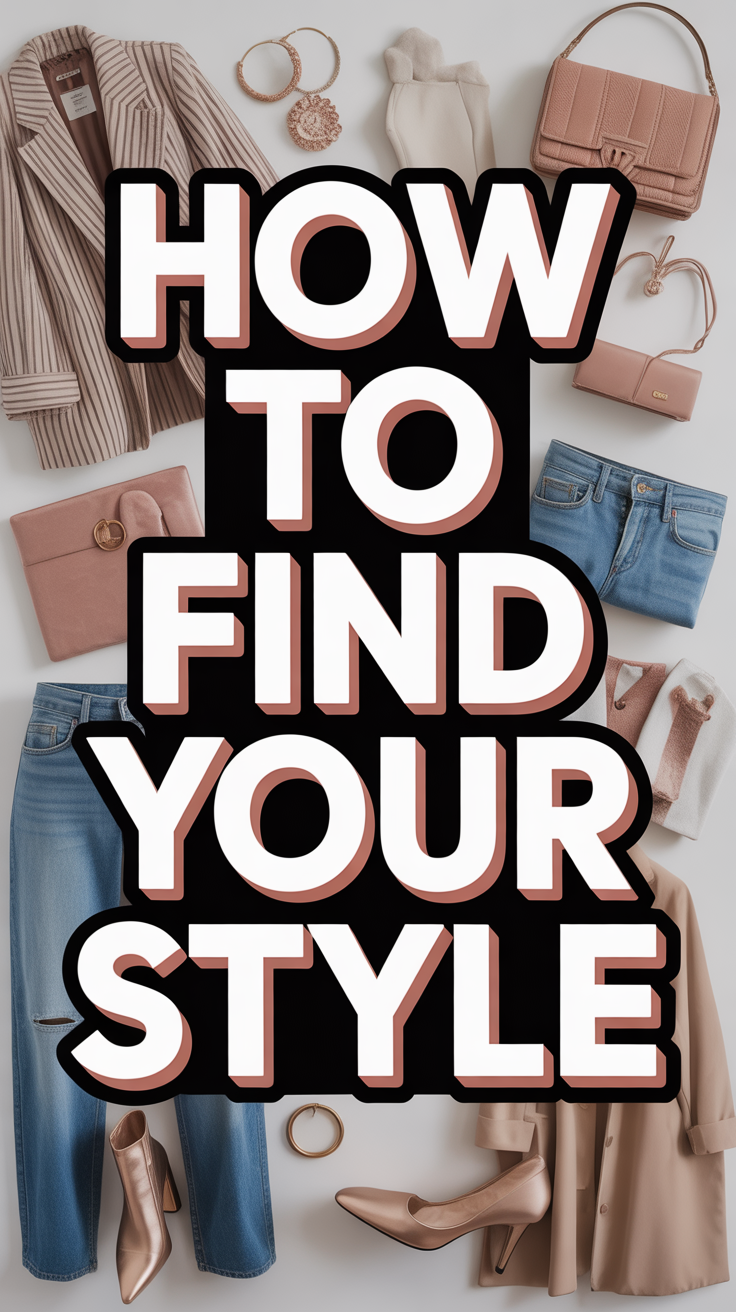
✨ How To Find Your Style
In a world brimming with fleeting trends and endless choices, discovering your personal style can feel like an overwhelming quest. Yet, few journeys are as rewarding. Your style is more than just the clothes you wear; it’s a powerful visual language that communicates who you are, what you value, and how you feel, all without uttering a single word. It’s an extension of your identity, a canvas for your personality, and a source of daily confidence.
For many, the desire to cultivate a distinctive style stems from a yearning for authenticity, a wish to streamline their wardrobe, or simply the aspiration to feel more put-together and confident every day. Imagine opening your closet and seeing only items you genuinely love, that fit perfectly, and that effortlessly combine to create outfits that make you feel like your best self. This isn’t a fantasy; it’s the tangible outcome of finding your style.
This comprehensive guide is designed to demystify the process, offering a structured, step-by-step approach to uncover and refine your unique aesthetic. We’ll delve into self-reflection, strategic inspiration gathering, practical wardrobe analysis, and intentional building, equipping you with the tools and insights needed to cultivate a style that is authentically yours. By the end of this article, you will have a clear roadmap to navigate the exciting path of self-expression through fashion, transforming not just your wardrobe, but your relationship with yourself.
What You’ll Need
Embarking on the journey to find your style is an investment in yourself, and like any worthwhile endeavor, a few simple tools will make the process smoother and more effective. Gather these essentials to optimize your experience:
- Notebook or Digital Journal & Pen: For jotting down thoughts, reflections, keywords, and style ideas. A dedicated space for your insights is invaluable.
- Internet Access & Device: Essential for gathering visual inspiration from platforms like Pinterest, Instagram, fashion blogs, and online stores.
- Smartphone with Camera: To document outfits, try-ons, and inspiration. Visual records are crucial for tracking your progress and understanding what works.
- Full-Length Mirror: A non-negotiable tool for critically evaluating outfits, understanding proportions, and assessing fit.
- Open Mind and Patience: Finding your style is a journey, not a race. Be willing to experiment, make mistakes, and allow your style to evolve naturally.
- Clear Wardrobe Space: You’ll need room to sort, try on, and reorganize your existing clothing during the wardrobe audit phase.
- Measuring Tape (Optional but Recommended): Useful for taking your own measurements, which can help in understanding fit and making informed purchasing decisions.
- Comfortable Clothing for Trying On: You’ll be spending time trying on various items, so ensure you’re comfortable.
Step-by-Step Instructions
Finding your style is a deeply personal and iterative process that combines introspection with practical application. Follow these detailed steps to build a style that truly reflects you.
-
Step 1: Embark on Deep Self-Reflection and Introspection
Before you even think about clothes, you need to understand the person wearing them. Your style should be an authentic extension of who you are and how you live. This foundational step requires honest self-assessment.
- Define Your Core Values & Personality: What principles guide your life? Are you adventurous, minimalist, traditional, creative, rebellious, sophisticated? List 3-5 adjectives that describe your personality. These words will form the bedrock of your style identity. For example, if you value comfort and practicality, your style will lean towards relaxed silhouettes and durable fabrics. If you’re creative, you might gravitate towards unique cuts, bold colors, or artistic patterns.
- Analyze Your Lifestyle: Consider your daily routines and commitments. What does a typical week look like for you? Do you work in a corporate office, a casual startup, or from home? Do you spend weekends hiking, attending social events, or pursuing hobbies? Your wardrobe should support your lifestyle, not hinder it. If 80% of your time is spent in casual settings, your wardrobe should reflect that balance.
- Identify Your Aspirations: How do you want to feel when you get dressed? Confident, powerful, comfortable, elegant, approachable? How do you want to be perceived by others? Your clothing can be a tool to help you embody these aspirations.
- Understand Your Body Shape and Preferences: Get to know your body. Stand in front of a full-length mirror without judgment. What silhouettes do you naturally gravitate towards? What areas do you like to highlight, and what do you prefer to downplay? Understanding your body shape (e.g., hourglass, rectangle, apple, pear, inverted triangle) can help you choose cuts and styles that flatter your proportions, making you feel more confident and comfortable.
- Consider Your Color Preferences: What colors make you feel good? What colors do you consistently avoid? Think about colors that complement your skin tone, hair color, and eye color.
Action: In your journal, write down answers to these questions. Create a list of 3-5 keywords that encapsulate your desired style and the essence of who you are.
-
Step 2: Gather Diverse Inspiration and Create a Mood Board
Once you have a clearer sense of yourself, it’s time to explore the visual landscape of style. This step is about collecting ideas, not copying them blindly.
- Explore Various Sources: Dive into platforms like Pinterest, Instagram, fashion magazines, style blogs, and even art, nature, architecture, or historical periods. Look at street style photos, celebrity looks, and even fictional characters whose aesthetics resonate with you.
- Curate Your Visuals: As you browse, save images that catch your eye. Don’t limit yourself to entire outfits; save pictures of specific colors, textures, patterns, accessories, details (like a unique collar or sleeve), or even moods and atmospheres. The goal is to identify common threads and recurring themes.
- Build Your Mood Board: Create a digital mood board (Pinterest is excellent for this) or a physical one using magazine cutouts. Arrange your collected images in a way that feels cohesive.
- Analyze Your Selections: Once your mood board is substantial (aim for 30-50 images), step back and analyze it. What recurring elements do you see? Are there dominant color palettes, silhouettes, fabrics, or accessories? Do you notice a particular aesthetic emerging (e.g., bohemian, classic, edgy, minimalist, playful)? This analysis helps you move beyond simply liking an image to understanding why you like it and how it connects to your self-reflection from Step 1.
Action: Dedicate an hour or two to creating a comprehensive style mood board. Identify 3-5 recurring themes or elements from your board.
-
Step 3: Conduct a Thorough Wardrobe Audit and Declutter
Now it’s time to assess your current wardrobe. This practical step helps you understand what you already own, what works, and what needs to go, creating space for your evolving style.
- Empty Your Closet: Take every single item of clothing, every accessory, and every pair of shoes out of your closet and drawers. Lay them out on your bed or floor. This gives you a complete overview of your possessions.
- Categorize Each Item: Pick up each item and ask yourself:
- “Love It”: You wear it often, it fits well, it makes you feel great, and it aligns with your emerging style. Keep these.
- “Like It”: You wear it occasionally, it’s comfortable, but perhaps not a “wow” piece. Consider if it fits your new style direction.
- “Donate/Sell/Discard”: It doesn’t fit, is damaged beyond repair, you haven’t worn it in over a year, or it no longer aligns with your style or lifestyle. Be ruthless but realistic.
- “Repair/Alter”: It’s a great piece, but needs a button, a hem, or a minor fix. Set these aside for a tailor or DIY.
- “Maybe”: You’re unsure. These items need a “try-on” session.
- The “Maybe” Try-On Session: For all “Maybe” items, try them on in front of your full-length mirror. Ask: “Does this make me feel confident? Does it fit well? Does it align with the keywords and mood board from Steps 1 & 2?” If the answer isn’t a resounding “yes,” consider letting it go.
- Identify Gaps and Redundancies: As you go through your items, make notes. Do you have too many of one type of item and not enough of another? Are there essential pieces missing that would complete outfits or support your lifestyle?
Action: Complete your wardrobe audit. Physically separate items into categories. Make a list of 5-10 “gaps” in your wardrobe that would help you achieve your desired style.
-
Step 4: Define Your Core Style Elements and Create a Style Manifesto
With your self-reflection, inspiration, and wardrobe audit complete, it’s time to synthesize this information into concrete style guidelines.
- Refine Your Color Palette: Based on your personal preferences, skin tone, and mood board, select a core color palette. This usually includes 3-4 neutrals (e.g., black, white, navy, grey, beige, olive) and 2-3 accent colors that you love and that feature prominently in your inspiration.
- Identify Preferred Silhouettes and Proportions: What shapes and fits do you find most flattering and comfortable? Do you prefer tailored, oversized, fitted, flowing, structured? What hemlines do you gravitate towards for skirts, dresses, and trousers?
- Pinpoint Favorite Fabrics and Textures: Do you love the feel of silk, cotton, linen, wool, denim, leather, or cashmere? What textures speak to you – smooth, chunky, delicate, rugged?
- Determine Key Pieces/Staples: Based on your lifestyle and aesthetic, identify the foundational items that will form the backbone of your wardrobe. These are often versatile pieces that can be mixed and matched (e.g., a well-fitting pair of jeans, a classic blazer, a simple white tee, a versatile dress).
- Uncover Signature Details: What small elements will make your style uniquely yours? This could be a specific type of jewelry, a preference for certain necklines, a particular shoe style, or a signature accessory like a scarf or belt.
- Write Your Style Manifesto: Consolidate all these elements into a concise “style manifesto” or a few guiding principles. This could be 3-5 sentences or bullet points that clearly articulate your style. For example: “My style is minimalist, comfortable, and sophisticated. I prioritize quality fabrics, neutral colors with occasional pops of deep green, and clean lines. My go-to pieces include tailored trousers, cashmere sweaters, and classic leather accessories.”
Action: Write your personal style manifesto in your journal. This will be your compass for future shopping and outfit creation.
-
Step 5: Experiment and Play with Outfits
This is where your style comes to life! It’s about trying things out, making mistakes, and discovering new combinations without the pressure of buying anything new.
- Shop Your Closet: Use your existing “Love It” and “Like It” items. Challenge yourself to create new outfits using pieces you haven’t combined before. Try mixing different textures or layering items in unexpected ways.
- Utilize Your Full-Length Mirror: Try on everything. Pair different tops with different bottoms, add accessories, and experiment with various shoe options. Pay attention to how different combinations make you feel.
- Take Photos: For outfits you particularly like (or dislike), take a quick photo. This visual record is invaluable. Later, you can review these photos to identify patterns in what works well for you and what doesn’t. It’s easier to be objective when looking at a photo.
- Step Outside Your Comfort Zone (Gently): Try on items or combinations that might be slightly outside your perceived style, but still align with your core aesthetic. You might discover a new favorite look. Visit stores and try on items you wouldn’t normally consider, just to see how they look and feel, without any obligation to buy.
- Consider Different Occasions: Experiment with outfits for different aspects of your life – work, casual weekends, evenings out, special events. Ensure your emerging style can translate across various contexts.
Action: Dedicate a few hours to a “play session” in your closet. Take at least 10 photos of outfits you like and 5 of outfits you tried but didn’t quite work. Analyze why each worked or didn’t.
-
Step 6: Build a Curated Wardrobe with Intention
Once you’ve defined your style and experimented, it’s time to strategically fill the gaps identified in Step 3. This is about intentional purchasing, not impulse shopping.
- Shop with Your Manifesto and Gaps List: Before making any purchase, refer to your style manifesto and the list of wardrobe gaps. Ask yourself: “Does this item align with my style keywords? Does it fit my color palette and preferred silhouettes? Does it fill a genuine gap in my wardrobe?”
- Prioritize Quality Over Quantity: Invest in fewer, higher-quality pieces that will last longer and look better. Consider the “cost per wear” – a more expensive item worn frequently can be a better value than a cheap item worn once.
- Focus on Versatility: Choose items that can be mixed and matched with at least 3-5 other pieces in your existing wardrobe. This maximizes your outfit options and prevents having “orphan” pieces.
- Consider a Capsule Wardrobe Approach: Even if not fully adopting a capsule wardrobe, the principles are useful. Focus on a limited number of interchangeable pieces that work harmoniously together.
- Try Before You Buy (Always): If shopping in-store, try everything on. If shopping online, be diligent about checking size guides and return policies. Understand how fabrics drape and feel on your body.
- Don’t Be Afraid of Secondhand: Thrift stores, consignment shops, and online marketplaces can be excellent sources for unique, high-quality pieces that fit your style and budget.
Action: Create a prioritized shopping list based on your gaps and manifesto. Make your next 1-3 purchases with extreme intention, focusing on quality and versatility.
-
Step 7: Refine and Evolve Your Style (An Ongoing Journey)
Finding your style isn’t a one-time event; it’s an ongoing process of refinement and evolution. As you grow and change, so too will your style.
- Regularly Review Your Wardrobe: Periodically (e.g., seasonally or twice a year), repeat a mini-version of your wardrobe audit. Reassess what you wear, what you love, and what no longer serves your style or lifestyle.
- Pay Attention to How You Feel: After wearing an outfit, take a mental note (or a physical one in your journal) of how you felt. Did you feel comfortable, confident, authentic? Or did something feel off? This feedback loop is crucial for refinement.
- Stay Open to New Ideas (Selectively): While staying true to your core, allow for subtle shifts and new influences. Your mood board can be a living document that you update occasionally. You might discover a new color you love or a different silhouette that works for you.
- Seek Feedback (Optional and Discerning): If you trust a friend or family member whose style you admire, you might occasionally ask for their honest opinion on an outfit. However, always prioritize your own feelings and comfort.
- Embrace Imperfection: Not every outfit will be perfect, and that’s okay. The goal is progress, not perfection. Enjoy the process of learning and growing.
Action: Schedule a quarterly “style check-in” in your calendar to review your wardrobe and style preferences. Commit to being mindful of how your clothes make you feel each day.
Pro Tips
- Prioritize Comfort Above All Else: True style feels effortless. If you’re constantly adjusting, pulling, or feeling restricted, it doesn’t matter how “fashionable” an item is – you won’t wear it. Comfort is the foundation of confidence.
- Understand Your Body, Don’t Just Follow Trends: While trends can be inspiring, they’re not one-size-fits-all. Learn what cuts, fabrics, and proportions flatter your unique body shape. Dressing for your body, rather than against it, will always result in a more polished and confident look.
- Invest in Tailoring: Even the most expensive garment can look ill-fitting if it’s not tailored to your body. Conversely, an inexpensive item can look high-end with a few simple alterations (hemming, taking in seams, adjusting sleeves). A good tailor is a style secret weapon.
- Accessories Are Your Signature: Don’t underestimate the power of accessories. A statement necklace, a distinctive scarf, a unique handbag, or a pair of classic shoes can transform a simple outfit and inject personality, allowing you to express your style even with a minimalist clothing base.
- Be Patient and Enjoy the Journey: Finding your style is a marathon, not a sprint. There will be moments of frustration and moments of triumph. Embrace the experimentation, learn from your choices, and allow your style to evolve naturally with you.
Common Mistakes to Avoid
- Chasing Trends Blindly: Adopting every new trend without considering if it aligns with your personal style, body type, or lifestyle can lead to a disjointed wardrobe and a feeling of inauthenticity.
- Comparing Yourself to Others: While inspiration is good, constantly comparing your style journey to influencers or friends can breed insecurity and prevent you from truly discovering what works for you. Your style is unique to you.
- Buying Items Just Because They’re on Sale: A bargain isn’t a bargain if you never wear the item. Impulse buys often don’t fit your aesthetic, fill a real gap, or make you feel good, leading to wardrobe clutter and wasted money.
- Ignoring Comfort for Fashion: If an item is beautiful but uncomfortable, you’ll likely avoid wearing it. True style integrates comfort, making you feel at ease and confident throughout the day.
- Expecting Instant Results: Developing a strong personal style takes time, experimentation, and self-reflection. It’s a continuous process, not an overnight transformation. Be patient with yourself.
- Neglecting Undergarments: The foundation of any great outfit starts with well-fitting, appropriate undergarments. Ill-fitting bras or visible panty lines can undermine even the most carefully chosen ensemble.
FAQ
Here are some common questions people ask when embarking on their style journey:
Q: How long does it take to truly find your style?
A: While you can establish your core style elements and manifesto within a few weeks or months of dedicated effort, finding your “true” style is an ongoing journey. It evolves as you grow, your lifestyle changes, and you continue to learn what makes you feel best. Think of it as a continuous refinement rather than a fixed destination.
Q: Can my style change over time?
A: Absolutely! Your style is dynamic and should reflect your current self. As you enter new life stages (e.g., career changes, parenthood, retirement), your preferences, values, and lifestyle will shift, and your style will naturally evolve with them. Embrace these changes as opportunities to refine and refresh your aesthetic.
Q: Is it expensive to find my style and build a new wardrobe?
A: Not necessarily. Finding your style is more about intentionality and strategic choices than spending a lot of money. The process encourages you to utilize what you already own, invest in versatile pieces, and prioritize quality over quantity. Often, people find they save money in the long run by avoiding impulse buys and having a cohesive, functional wardrobe.
Q: What if I like multiple, seemingly conflicting styles? Can I have more than one style?
A: Yes, you can absolutely have different facets to your style! Many people have a “work style,” a “casual weekend style,” or a “special occasion style.” The key is to find common threads or overarching themes that tie them together, or to clearly define when and where each style applies. You might also find ways to blend elements from different styles to create a unique hybrid that feels authentic to your multifaceted personality.
Conclusion
Finding your style is far more than just curating a closet full of clothes; it’s a profound act of self-discovery, self-expression, and self-empowerment. It’s about aligning your outer presentation with your inner essence, creating a visual narrative that tells your unique story to the world. By embarking on this journey, you’re not just building a wardrobe; you’re cultivating confidence, fostering authenticity, and streamlining your daily life.
The steps outlined in this guide – from deep introspection and inspiration gathering to meticulous wardrobe auditing and intentional building – provide a clear, actionable framework. Remember that style is fluid, a living reflection of who you are at any given moment. It will evolve, adapt, and grow with you, making the process an exciting and continuous adventure.
Don’t be afraid to experiment, to make mistakes, and to celebrate the small victories along the way. Your style journey is uniquely yours, so embrace the process with an open mind and a sense of play. The most stylish person is always the one who feels genuinely comfortable and confident in their own skin, expressed through the clothes they choose to wear. Start today, and unlock the power of your personal style.